Qube Cinema
Cutting cloud cost 65% by redesigning an inbox
Theatres check Qube Wire every week to see if their films and keys have arrived. Fixing how the inbox was organised also fixed what it cost to run.
- Role
- Sole designer, Qube Wire
- Period
- Qube Cinema
- Team
- Me, with product and engineering
- Partners
- Engineering, theatre operations
- Platform
- Web
- Reading time
- 4 min
The problem
A film delivery has two parts: the encrypted files and the key that unlocks them. Theatres check both every week.
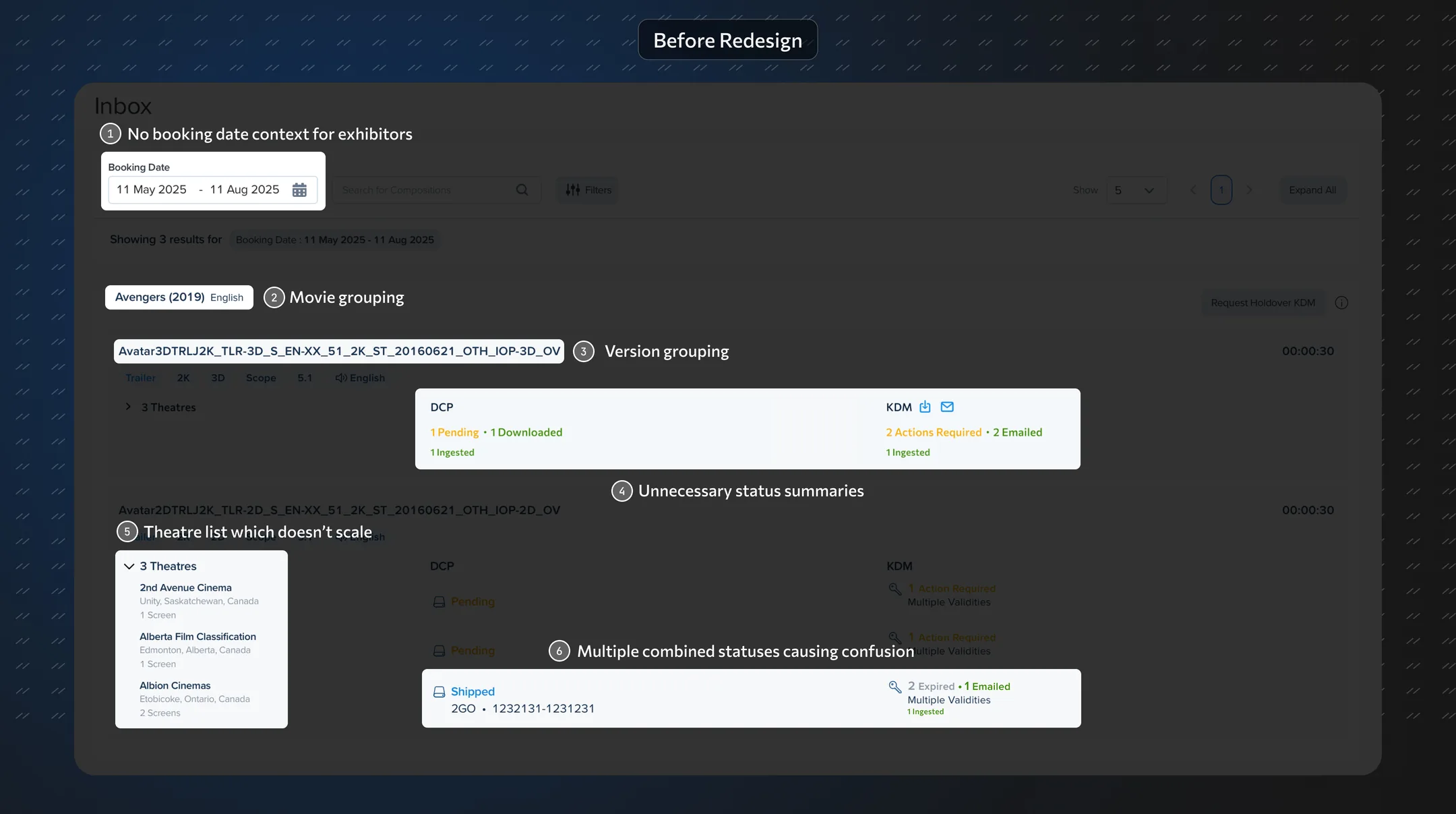
The inbox showed every film, every format and every theatre in one flat list. For a chain with hundreds of screens it was slow to use and expensive to run.
What I found
The cost problem and the usability problem had the same cause. The system worked out every film, format and theatre relationship at once.
People think one film at a time. They pick a film, then check it.
Key decisions
- Pick a film first
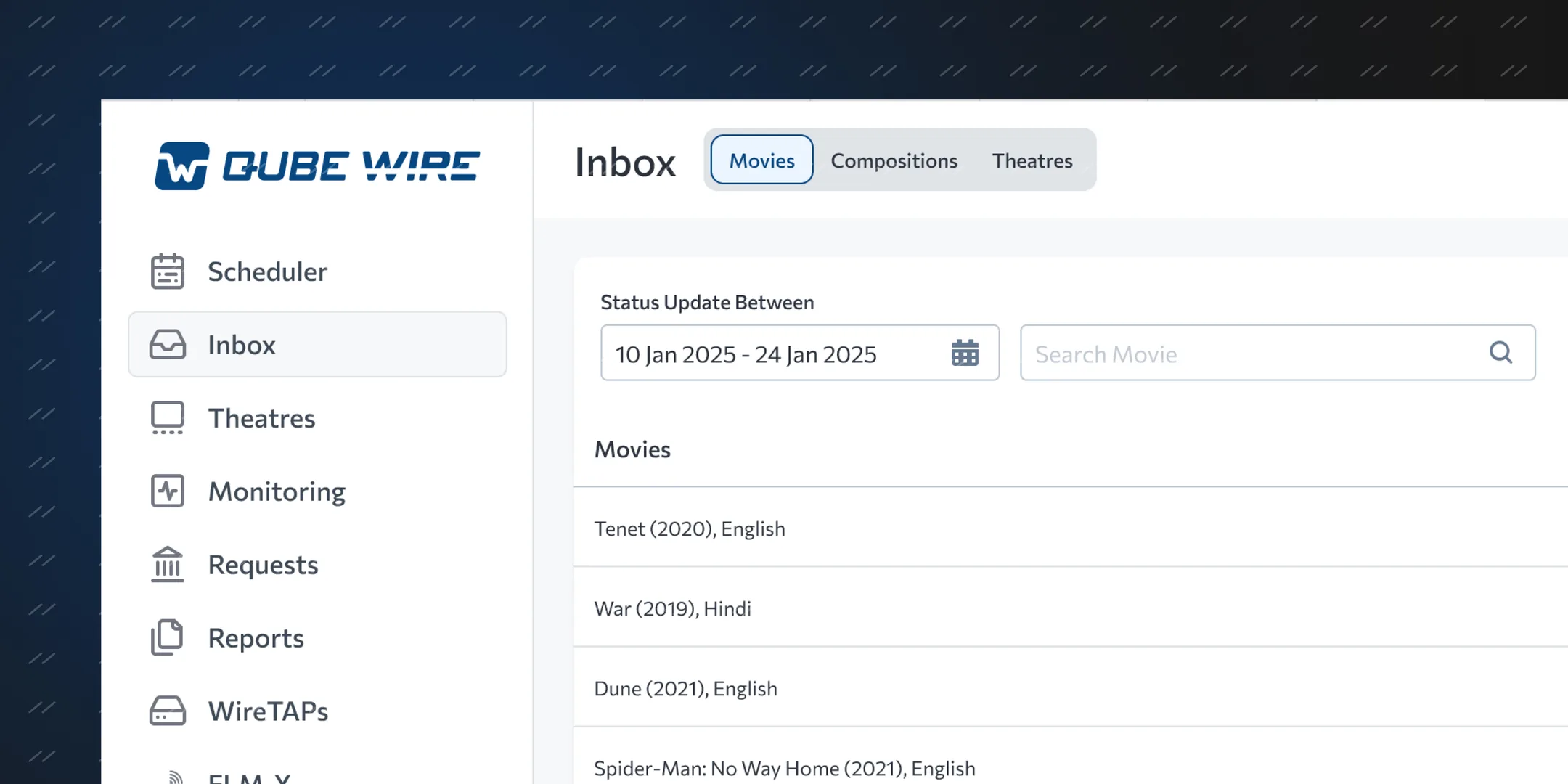
- Level one lists this week's films. Level two shows that film's versions and their status across theatres.
- Show only the latest status
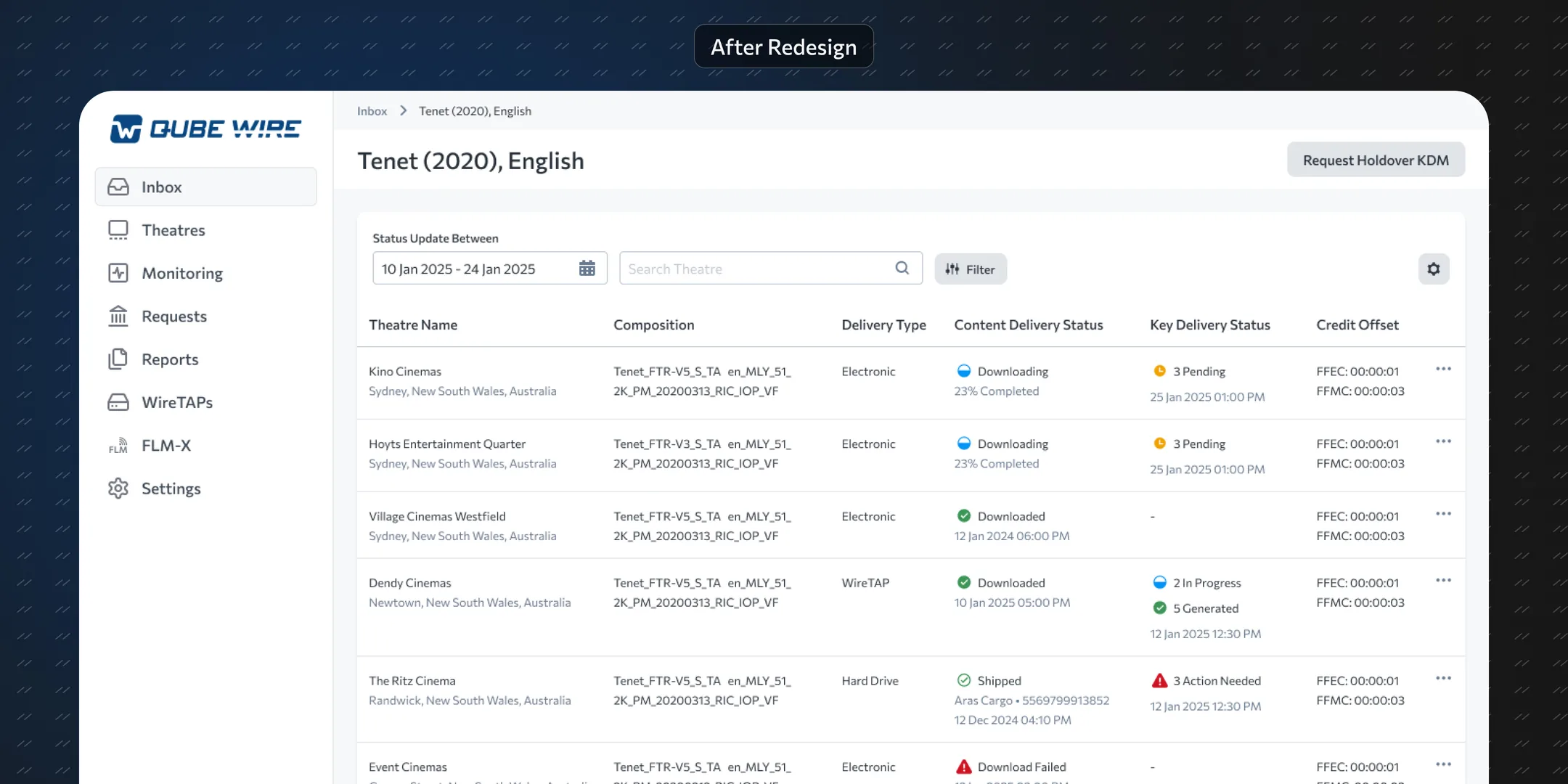
- Each film and theatre pair shows its most recent content and key status, which cut the data behind every view.
- A theatre-first view
- Single-location theatres see every incoming film for their screens at once.
How it's built
- Went below the UI
- I sat with engineers to trace how deliveries were stored, indexed and queried, then proposed a new data structure, not just a new screen.
- Hierarchy matches the query
- The two levels map to how the data is fetched, so each request indexes and renders far less.
- Edge cases got simpler
- Repeat delivery attempts, painful in the old list, became one row with its history.
What I got wrong
My first prototype removed all grouping and left a flat table for people to filter. It failed. I had taken away the structure people relied on without reducing the data. Simplification isn't removal. The final design adds a step and feels lighter.
Result
- −65%
- AWS indexing and compute cost
- −30%
- time to find a status
- 46 → 68
- Qube Wire NPS
The same design scales from a single-screen theatre to a 500-screen chain.